Understanding Sports Betting Odds and Probabilities
Understanding the intricacies of sports betting odds and probabilities is crucial for bettors looking to make informed decisions and potentially maximize their returns. In the dynamic world of international sports betting, where events like the FIFA World Cup draw global attention and unprecedented wagering volumes, a solid grasp of these fundamental concepts can give you a significant advantage. Let’s delve into the world of sports betting odds and probabilities to help you navigate the ever-evolving landscape.
Sports betting odds are the numerical representations of the likelihood of an event occurring. These odds can be displayed in various formats, such as decimal, fractional, or American (moneyline) odds, and they directly reflect the bookmaker’s assessment of the probability of a particular outcome. Understanding how to interpret these odds is the first step in making informed betting decisions.
Decimal Odds
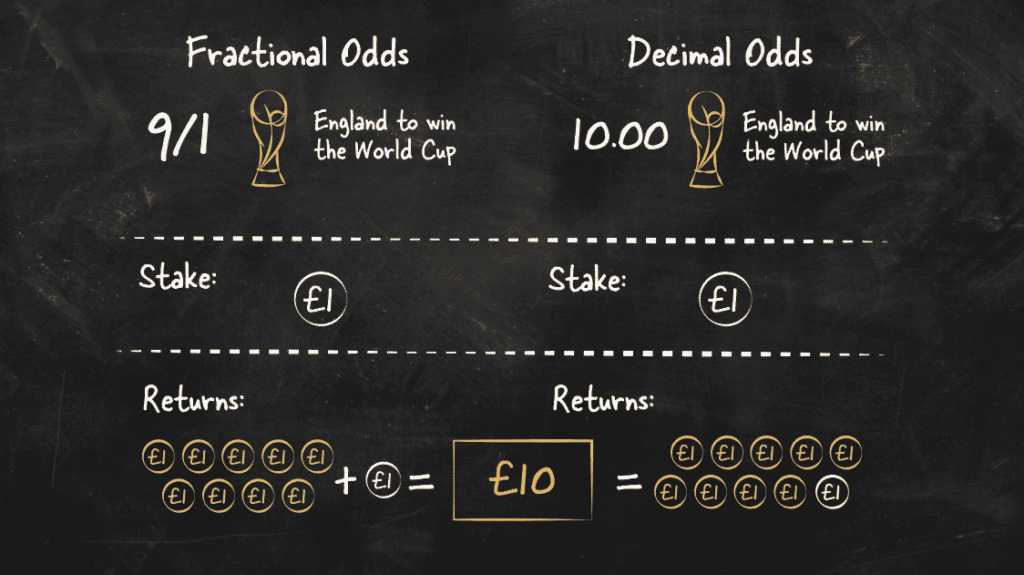
Decimal odds are the most commonly used format in international sports betting markets. They represent the amount you would receive, including your original stake, for every unit wagered. For example, odds of 2.50 would mean that for every $1 wagered, you would receive $2.50 in winnings, including your original $1 stake.
Fractional Odds
Fractional odds are another popular format, particularly in the United Kingdom and some European markets. These odds represent the ratio of the potential winnings to the stake. For instance, odds of 5/2 would mean that for every $2 wagered, the potential winnings would be $5, plus the original $2 stake.
American (Moneyline) Odds
American or moneyline odds are commonly used in the United States and some other regions. These odds are expressed as positive or negative numbers, indicating the amount of money you would win (or need to wager) to earn $100 in profit. Positive odds (+150) represent the amount you would win on a $100 bet, while negative odds (-200) represent the amount you would need to wager to win $100.
Understanding Probability and Implied Probability
Probability is the measure of the likelihood of an event occurring, expressed as a percentage or decimal value between 0 and 1. In the context of sports betting, probability is a crucial factor in determining the fairness and value of the odds offered by bookmakers.
Calculating Probability from Odds
To calculate the probability of an event occurring from the given odds, you can use the formula: Probability = 1 / (Odds + 1). For example, if a team has odds of 2.50 to win a match, the probability of their victory can be calculated as 1 / (2.50 + 1) = 0.40, or 40%.
Implied Probability
Implied probability is the bookmaker’s assessment of the likelihood of an event occurring, as reflected in the odds they offer. This is a crucial concept for bettors to understand, as it allows them to identify potential value in the odds and make more informed betting decisions. By comparing the implied probability to your own assessment of the event’s likelihood, you can identify opportunities where the odds may be mispriced.
Evaluating Betting Value

Once you understand how to interpret sports betting odds and probabilities, the next step is to evaluate the value of a particular bet. This involves comparing the bookmaker’s implied probability with your own assessment of the event’s likelihood, known as your “true” probability.
Positive Expected Value (EV+)
If your “true” probability of an event occurring is higher than the bookmaker’s implied probability, the bet is considered to have a positive expected value (EV+). This means that, over the long run, taking such bets would be mathematically advantageous and potentially profitable.
Negative Expected Value (EV-)
Conversely, if the bookmaker’s implied probability is higher than your “true” probability, the bet is considered to have a negative expected value (EV-). These bets, while potentially enticing in the short term, are mathematically disadvantageous and should be approached with caution.
Practical Tips for Leveraging Odds and Probabilities
Now that you understand the fundamentals of sports betting odds and probabilities, here are some practical tips to help you leverage this knowledge in your betting strategies:
Shop for the Best Odds
Compare odds across multiple bookmakers to find the most favorable prices for your chosen bets. Even small differences in odds can significantly impact your potential returns over time.
Conduct Thorough Research
Develop a deep understanding of the sports, teams, and players you’re betting on. This will help you form more accurate assessments of the true probabilities of various outcomes, allowing you to identify value in the bookmaker’s odds.
Manage Your Bankroll Responsibly
Regardless of your level of expertise, it’s crucial to practice responsible gambling and manage your bankroll effectively. Set realistic betting limits, and never wager more than you can afford to lose.
Remember, sports betting is a complex and dynamic field, and understanding odds and probabilities is just one piece of the puzzle. By combining this knowledge with sound bankroll management and a disciplined approach, you can navigate the international sports betting landscape with greater confidence and potentially improve your chances of long-term success.
Responsible Gambling: If you or someone you know has a gambling problem, seek help from a qualified professional. Gambling should be for entertainment purposes only, and it’s important to set limits and never wager more than you can afford to lose.
